Rochester-area farmers lobby Albany for budget, regulatory changes
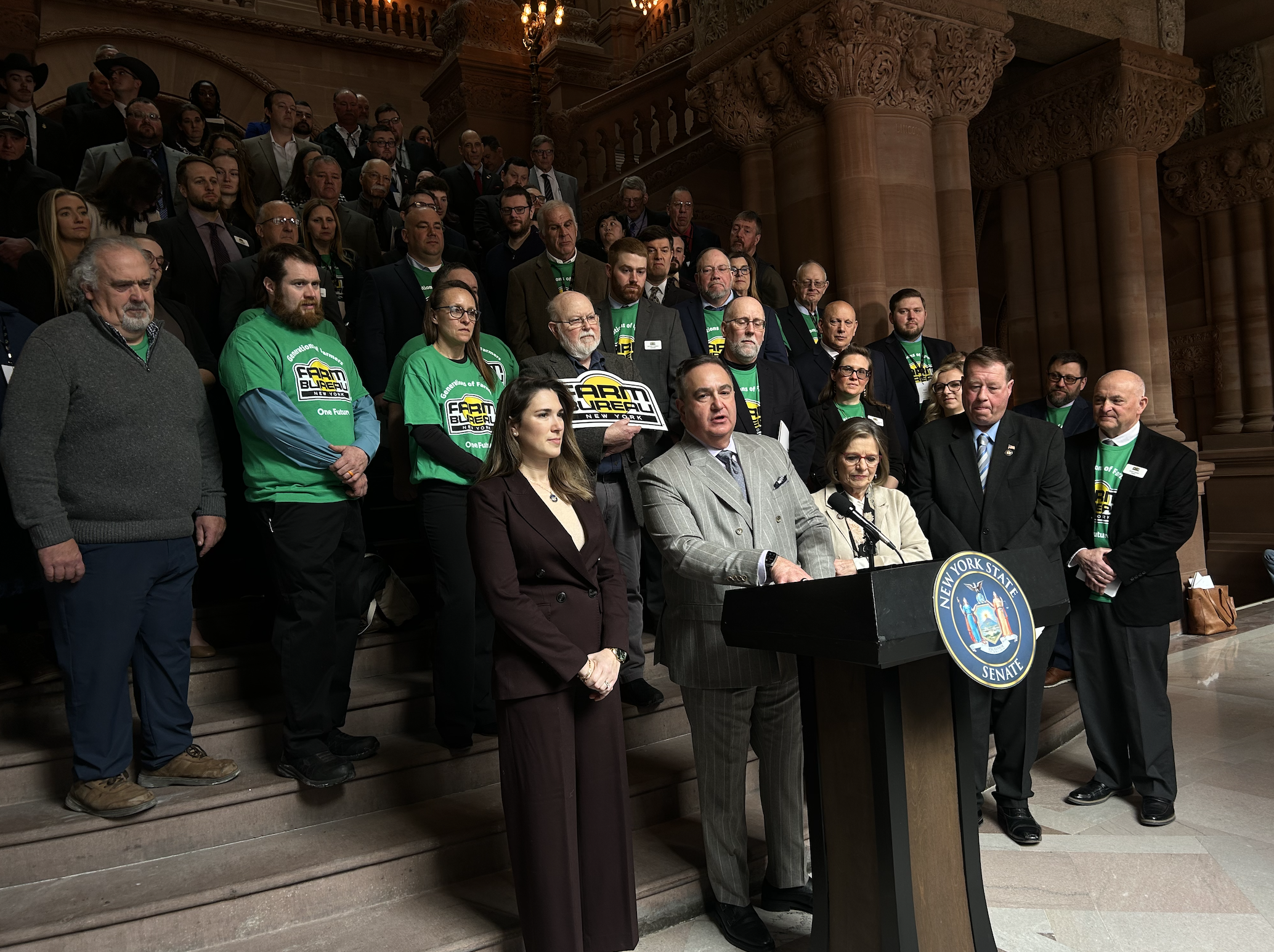
Standing in front of lobbying farmers, leaders of the New York Assembly and Senate Agriculture Committees speak at a press conference. (Photo by Jake Zajkowski)
Members of the New York Farm Bureau this week visited the state Legislature to push for the extension of refundable farm infrastructure tax credits, provisions in the agriculture budget and overtime pay reductions.
The agriculture advocacy organization, with 27,000 members statewide, hosted its annual lobbying event on Tuesday, meeting state lawmakers on their home turf during budget negotiation season.
With the release of Gov. Kathy Hochul’s fiscal year2027 state budget, Monroe County farmers are seeking the inclusion of legislation that will improve the daily function of the dairy and produce farming operations in the Rochester region.
The core four agriculture committee chairs and ranking members spoke at the morning news conference, often turning around for minutes at a time to speak directly to farmers. Sen. George Borrello, R-Sunset Bay, the ranking member of the Senate Agriculture Committee, said, “We have a great bipartisan team in agriculture, in both houses,” noting this committee of legislators, unlike others in the Assembly, works together for farmers.
Jessica Magguilli attended Lobby Days this year with the Monroe County delegation to speak on a handful of issues and provisions impacting her family’s dairy farm, Leibeck Farms in Spencerport. She came to Albany to “advocate about employment issues, health care and working conditions.”
Magguilli oversees scheduling and hiring for a workforce that milks a 230-head herd, predominantly Holstein, a breed of cattle. She says employment regulation is the number one farm policy movement in Albany that impacts her farm the most. Their operation hires high school students from Churchville, Hilton, Spencerport anådand the BOCES agriculture mechanics program.
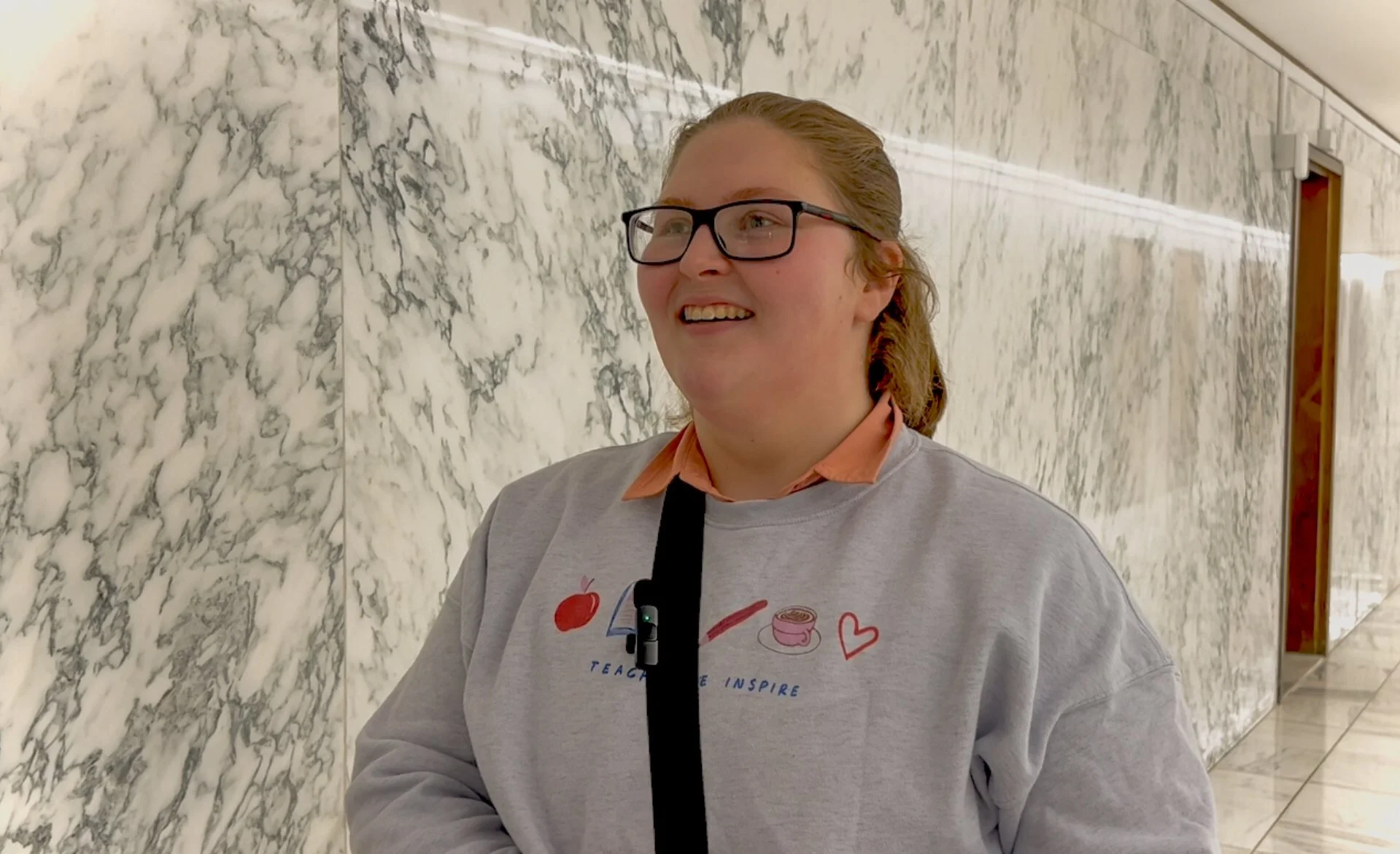
Jessica Magguilli speaks about agriculture advocacy in the New York Legislative Building (Photo by Jake Zajkowski)
In the legislators’ offices, they discussed the inclusion of Assembly Bill 297, an extension of the refundable investment tax credit until 2033—now with construction costs for farm workers’ housing to be eligible. The Farm Bureau also sought research funding for New York’s Center for Agricultural Medicine and Health, an alternative solution to the Temperature Mitigation Program Act. If implemented, the TEMP Act would require written heat-stress plans and fine farms for not followingthat do not follow plans that provide access to water and monitor temperatures exceeding 80 degrees Fahrenheit.
“We had some good conversations about the TEMP bill with (Assemblyman) Harry Bronson,” said Robert Colby, a dairy and vegetable farmer from Ogden. “He’s a sponsor. … He understands there’s got to be modifications to it.”
Bronson is also the chairman of the Labor Committee, which has jurisdiction over advancing the legislation. This is the second time the TEMP Act has been introduced in the Legislature. From the beginning, the Farm Bureau has requested an exemption for agriculture from workplace temperature regulations.
Although no overtime reform legislation is advancing this year, farms that rely heavily on hired labor are seeking a regulatory change. They want lawmakers to eliminate the requirement to pay overtime wages during the sector’s mandatory 24-hour weekly day of rest. Under their proposal, employers would not owe overtime for those hours as long as a worker’s total weekly hours remain below the state’s overtime threshold.
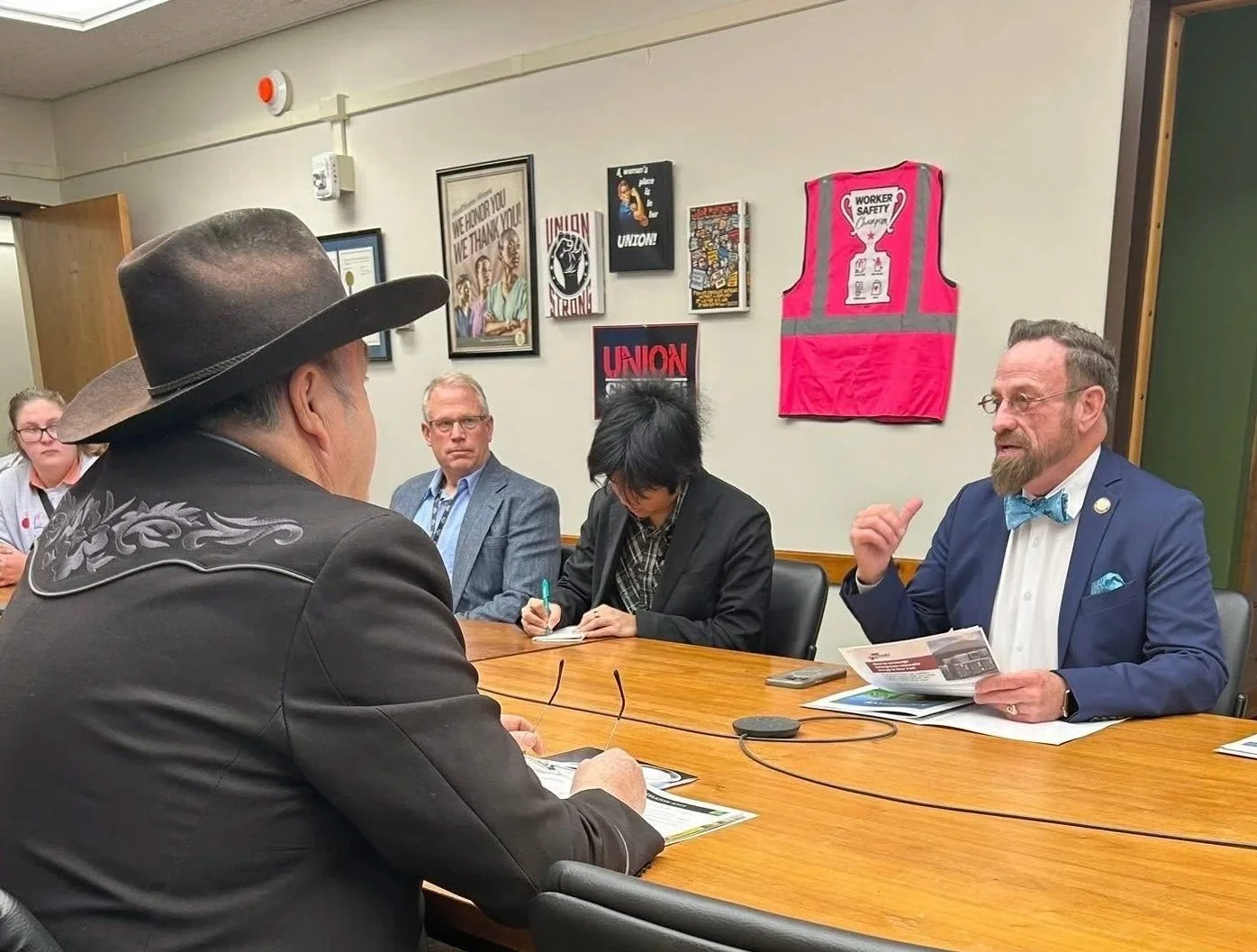
Robert Colby and the Monroe County delegation speak with Assemblyman Harry Bronson about the TEMP Act. (Photo provided by NYFB)
While Colby milks nearly 300 cows using autonomous milking robotsrobotic milking systems and grows vegetables for frozen processing, he still employs 15 full-time workers. He says his vegetable production business is becoming “less profitable as labor becomes more of an issue.”
Budget provisions are also top of mind for special interest groups and crop-specific groups seeking to receive state funding. Cornell University is asking for $5 million in research farm operational funds after facing a hit from frozen and restructured federal research grants by the Trump administration.
Colby once served as a board member for the Monroe County Farm Bureau, and now is a Monroe County legislator representing Chili, Greece, Ogden and Sweden.
“Some of the same budget items that Hochul zeroed out are typically what she knows is going to be put back in some of those programs,” he said.
The 2026 New York Farm Bureau Lobby Days were hosted one month earlier than previous years.
“They are holding their budget meetings earlier this year than they have in the past. They have a really big move to get the budget done on time,” driven by Hochul’s primary election, Colby says. On Tuesday, Lt. Gov. Antonio Delgado suspended his campaign for governor, ending his challenge to Hochul.
Hochul visited agribusiness booths at the Taste of New York Reception Monday night, touting her $30 million tariff relief plan that has received mixed reactions[CG4] from the Legislature. The plan has been well received by state agriculture associations, but its details have yet to be announced.
Other farm community-backed priorities this legislative session include requiring fire, rescue and library tax districts to use agricultural assessment values—rather than full market value—when calculating property taxes; establishing a clean fuel standard to create a market for low-carbon biofuels; and exempting agriculture from extended producer responsibility recycling legislation aimed at reducing packaging waste.
The local Farm Bureau board will host its own Taste of Monroe County reception following its March legislative meeting, held on the second Tuesday of the month.
